
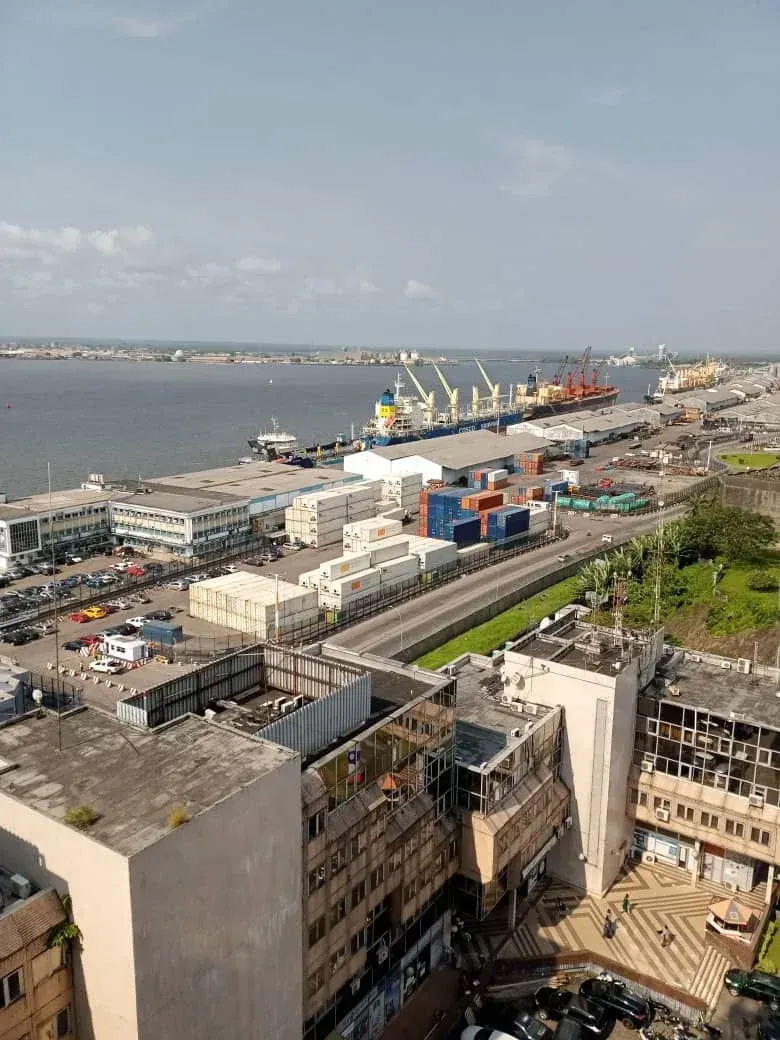
On a rainy morning in Douala, the road out of Ndogpassi floods. The bus stop becomes unusable, traffic crawls, and motorcycle drivers raise their fares to match the risk. For the commuter, it’s a question of how much longer the trip will take and how much more it will cost. Scale that morning up across a city that handles most of Cameroon’s trade, and a flooded road stops being a local inconvenience. It becomes a line item in the national economy.
Cameroon runs on two capitals, sitting in different cities, which is the tension worth examining here. Yaoundé holds the presidency and the ministries, parliament and the wider machinery of national administration. Douala holds the country’s principal port, most of its manufacturing and logistics, and the businesses connecting Cameroon to the wider world. The interesting question isn’t that one city governs and the other trades, it’s why so much of the governing happens somewhere other than where the trading does.
Douala’s advantage starts with geography. Sitting on the Wouri estuary, the city has been Cameroon’s window to maritime trade for well over a century, long before there was a Cameroonian state to speak of. In 2024 its port handled roughly 12.2 million metric tonnes of cargo and moved more than 70% of the country’s imports, while also serving landlocked neighbors like Chad and the Central African Republic. But a port alone doesn’t make an economic capital. What grows around it does, manufacturers needing imported inputs, banks financing transactions, brokers and haulers making a living off cargo in motion. Every delay along that chain gets paid for by someone, eventually.
Douala’s dominance isn’t as settled as it once looked, though. The deep-water port at Kribi handled about 12.7 million tonnes in 2024, edging past Douala’s volume for the first time. Kribi hasn’t dethroned Douala as the main gateway, but its rise signals that Cameroon’s maritime economy is starting to spread out.
Which is where Yaoundé actually matters. Tax policy, regulations and the public investment decisions that shape roads and power grids all get made there. A factory in Douala can employ hundreds of people and sell nationwide, and still have its costs reshaped by a decision made three hundred kilometers away.
Nowhere is that clearer than on the road between them. The Douala-Yaoundé-Ayos-Bonis corridor links the port and industrial belt to the seat of government and onward east, and the World Bank’s plans for the broader Douala-Bangui corridor are explicitly about cutting vehicle operating costs and strengthening trade along that route. In August 2025, a resident of Bonabéri told Cameroon Tribune the trip from Bekoko to Mutzig, short on paper, could take seven hours given the state of the roads. Businesses in Douala’s industrial zones report a similar story: cracked roads, power cuts, sanitation that never quite gets fixed.
It’s tempting to read that gap as simple neglect, Yaoundé failing to invest where the money gets made. The picture is more complicated. Cameroon has spent years missing its own target of putting at least 30% of the national budget toward public investment, and the Finance Ministry’s 2025 budget planning document blames much of that shortfall on rising security and social costs elsewhere. The Anglophone crisis has displaced close to a million people since 2016, and Boko Haram activity in the Far North has escalated since 2021, partly because security forces were redeployed toward Anglophone regions. Every franc spent containing those crises is a franc not spent resurfacing a road in Bonabéri. That doesn’t make the roads any less costly for the businesses absorbing it, but it complicates the story that the gap is pure indifference rather than a government juggling several expensive fires at once.
The comparison people reach for here is usually Lagos and Abuja, Nigeria split its political and commercial capitals in 1991, and Lagos has carried on as the country’s economic engine regardless. But the comparison cuts both ways. After the move, federal attention shifted to Abuja too, and Lagos, Nigeria’s smallest state by land but its most populous, was left funding much of its own infrastructure through borrowing. More recently, when the federal government concentrated major projects in Lagos again, politicians from the north accused the president of skewing the national budget toward one region. Underinvest in the commercial capital and it strains under its own weight; overinvest and it looks like favoritism to everyone else. Cameroon isn’t choosing between a good option and a bad one. It’s choosing between two ways of disappointing someone.
Set against that backdrop, Douala’s flooded roads look less like an oversight and more like the visible edge of a budget fight happening mostly out of view. Whether Cameroon’s mix of security spending and infrastructure investment is the right one is a judgment call, one shaped by how much weight a reader puts on the cost of the Anglophone crisis versus the cost of a truck stuck for seven hours on the way to Mutzig. What’s harder to dispute is the mechanism: the country’s two capitals are more tightly linked than the map suggests, and whatever gets decided in one shows up, sooner or later, on the road in the other.