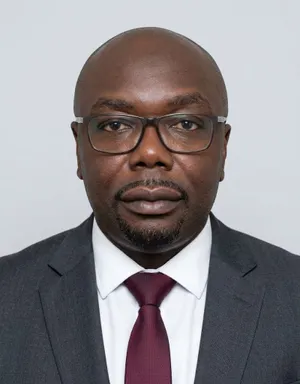
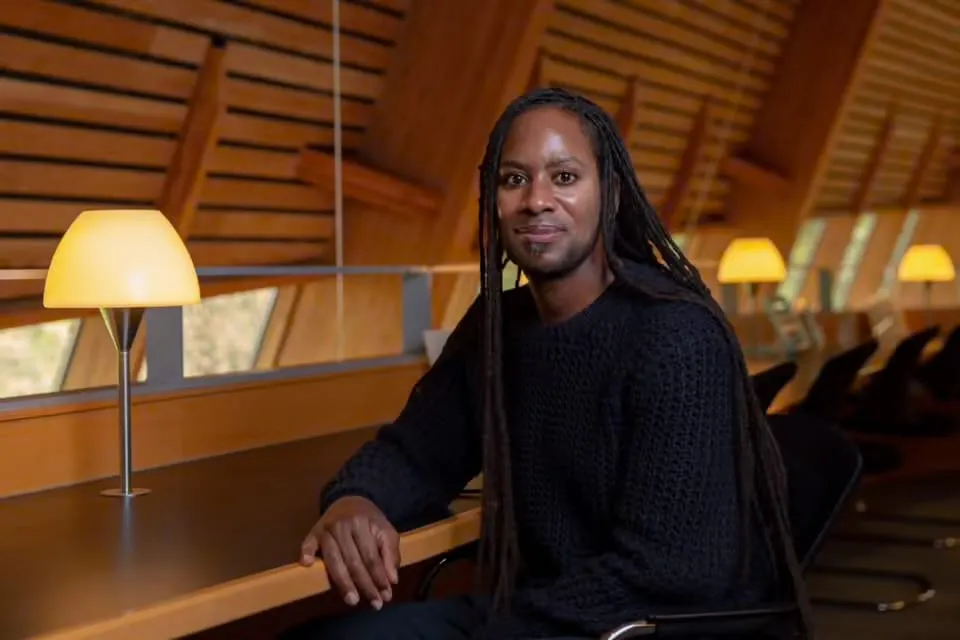
When Jason Arday arrived at Cambridge in 2023, he brought a story that was almost impossible not to notice. He has said he was diagnosed with autism at three, did not speak until 11, and did not read or write until 18. By 37, he had become Cambridge's youngest Black professor, working on race, inequality and education. Cambridge treated his arrival as evidence its institutions could look more like the society they serve.
Three years later, questions emerged about his 2015 PhD, his academic record, and extraordinary claims tied to his career. The scrutiny widened, went public, and preceded his resignation on August 5, 2026. On August 14, Arday was found dead at home in south London, aged 41. His family has described a three-year campaign of sustained abuse; Cambridge has defended the support it provided; police have said his death was unexpected but not suspicious.
That leaves a hard question, not answered simply by deciding whether Arday was a victim or his critics were right. Allegations concerning his doctoral thesis prompted scrutiny, though Liverpool John Moores University investigated and upheld its decision to award him the PhD. That should have settled the matter. It didn't. The Telegraph and the Times later reported more than 100 passages identical or near-identical to an earlier paper, separate from the claim LJMU had reviewed. Archival JustGiving records also showed roughly £6,285 raised through a page Arday had elsewhere described as bringing in £5 million. Cambridge announced an investigation into his qualifications and honorary appointments, and he resigned the same day.
None of that should be dismissed because Arday was Black, and equality should mean Black academics get judged by the same standards as everyone else. But the same standard isn't the same experience, and his appointment had already been framed through race and representation, in a country with very few Black professors. Once questions about his credibility emerged, the controversy stopped staying academic. Some critics portrayed Arday as a beneficiary of diversity policies; others saw the attacks as an effort to discredit Black achievement.
Arday's own conduct complicates a clean narrative in either direction. When Times Higher Education journalist Jack Grove emailed him questions about the plagiarism allegations, Arday reported Grove to the Metropolitan Police for harassment. The Met investigated Grove for four months before dropping the case; Grove learned of the complaint when an officer told him to stop contacting Arday, and the Met Commissioner later admitted the force had "dropped the ball." Arday also reported a second critic and instructed a law firm that suggested to a journalist's employer the inquiries might be "racially motivated," a letter that kept a separate investigation unpublished for about ten months. None of this proves his critics were right about everything, but it complicates any account that treats every question raised about him as racially motivated harassment, since some of what got labeled that way was, by the police's own later admission, an overreach against people asking legitimate questions.
Reports of racist emails, threats and intimidation also formed part of the controversy, and Cambridge introduced additional security after Arday raised concerns. Some specific incidents didn't hold up: Arday told investigators police had traced a severed pig's head sent to his parents' home to a specific butcher, but the Met told The Guardian no such investigation had taken place, and the shop said no officer had visited. A separate claim of an armed intruder at his workplace was unsupported by CCTV or witnesses.
The racial dimension doesn't disappear because of that, but the question needs more care. Arday had previously warned about a "playbook" through which Black academics could be targeted and their mistakes amplified, an uncomfortable frame given that some claims used to defend him turned out unverifiable, while some used to attack him held up. Some Black academics had concerns about his record before the controversy went wide, complicating any suggestion the criticism was simply racial. The harder question is what happened once those concerns moved into a politicised public controversy, one where Arday's own police complaints and legal threats against people asking reasonable questions became part of the story.
Cambridge's position also resists a simple villain-and-victim narrative. It initially defended Arday, calling the allegations a "vile campaign," before reversing course and opening its own investigation, while saying it provided substantial support throughout, protecting an employee from harassment while also protecting academic standards. The test is whether it did both without letting one undermine the other, and whether it acted quickly enough once evidence accumulated. His death makes the question more painful but doesn't let us answer what the evidence can't settle. His family believes the campaign against him contributed to his death, and that deserves to be heard, though it remains their account.
With Black professors still underrepresented in British higher education, every appointment carries unusual symbolic weight. A Black academic can stop being just an individual scholar, becoming evidence of institutional progress and, for some critics, proof diversity policies have gone too far. That's the paradox: shield Black academics from scrutiny and the credibility of their progress suffers; treat every disputed claim as proof they didn't belong and equality becomes another test to keep passing. Arday's case sits inside both halves at once: some of what was done to him really was racialised harassment, and some of what he did in response really was an attempt to use accusations of racism to shut down legitimate scrutiny.
The answer isn't choosing between accountability and racial equality. It's demanding both, and being honest when a single case doesn't resolve into one story. Arday's case leaves Britain with a question reaching well beyond Cambridge: can its institutions hold Black professionals to the same standards without a different burden of suspicion? Opening the door isn't enough. Britain needs institutions where people can be investigated without being racialised and challenged without being dehumanised, so the next Black academic doesn't carry the same symbolic weight just to prove he belongs, or feel the same pressure to reach for the same shortcuts when scrutiny gets uncomfortable.