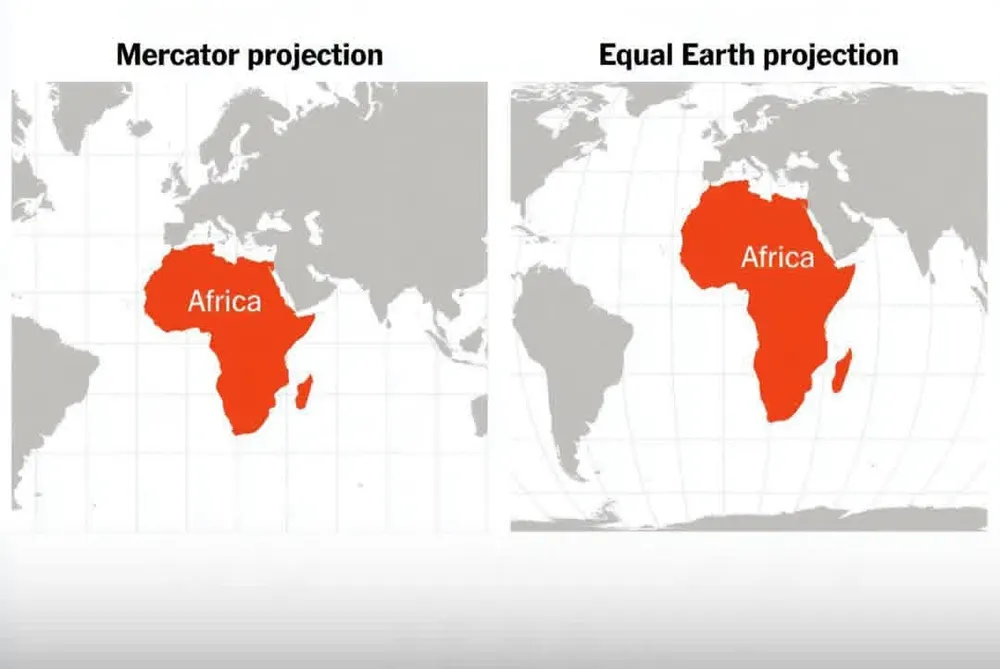
The moment I first saw the true size of Africa on the new world map, the one the UN adopted after Togo pushed the resolution through, a jolt of vindication surged through me. Finally, I thought, the world gets to know how big we really are. That feeling was the most fleeting joy I have ever experienced. In under a minute it had withered, and I began to question myself. What does a resolution to redraw a map actually do? Does Africa get treated differently because it now looks bigger on paper? Is respect really a function of square kilometers? It never has been.
Nations and continents are not respected because of their size but because of the value they produce, the way they present themselves to the world, and the way they have taught the world to treat them.
Thinking you will finally be respected because something has been written down confirming what people could already see with their own eyes is, frankly, a little delusional. And that is how many of us are treating this development. The Gulf states are a fraction of Africa's size. Nobody messes with the Emiratis, the Saudis, the Qataris. Africa, despite sitting on the most opulent natural resources of any continent, is still called a shithole, a place of misery and destitution.
No international policy has shifted to reflect our new found bigness. The Americans, the Chinese, the French, the West as a whole, none of them have had a change of heart to mirror this new landmass.
I am still waiting to hear about investment flowing in because we are now correctly measured. If you ever believed Africa's real problem was cartographic misrepresentation, let the world's silence on this be your answer.
Who actually gets to feel good from this exercise? Largely us, and mostly on social media. The outside world's perception of Africa was never built on square kilometers. It was built on what we produced, governed, and demanded for ourselves.
The resizing that matters isn't cartographic. It's internal. We must resize our ambitions, as individuals, as families, as communities, as cooperations, as nations, as a continent, because the size of our ambition determines how far we can go in commanding the respect we say we want. Respect is earned, not issued by resolution.
We must resize our institutions' appetite for competence. Take Cameroon, my own country, as an example. How many of our institutions can honestly be called efficient? If we cannot serve our own people well, why would any neighbor be comfortable sending their children to us, or speaking well of us?
We must resize the seriousness with which we hold our leaders. Africa's leadership crisis; leaders who seize power, evade accountability, and govern as despots, does not persist because these men are strong. It persists because we have built weak mechanisms that let them thrive.
What does internal resizing actually look like? Policy follow-through instead of communiqués. Industries built instead of industries imported. Virtues enforced instead of merely preached.
Robert Dussey, the Togolese foreign minister behind this resolution, told the Reuters news agency
A fair world begins with a fair map.
I beg to differ. A fair world begins when a nation works on itself so thoroughly that its value exports itself and earns respect without ever having to ask.
Resizing a map does not redraw respect. Only sustained, unglamorous work does. The map has gotten bigger. We have stayed exactly the same size in the things that count.