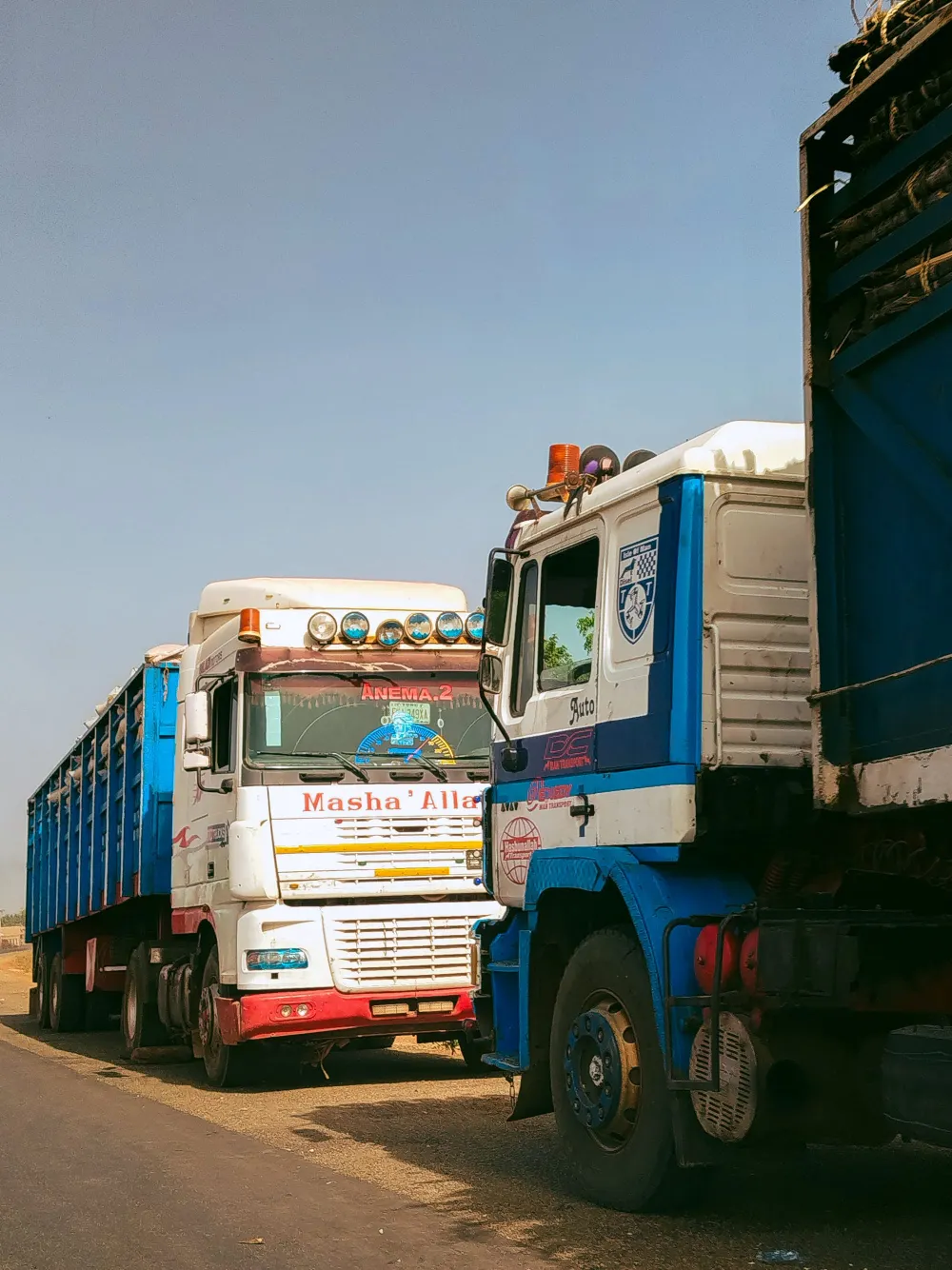
A truck leaves Douala with an ordinary cargo bound for Nigeria. Nothing exotic, just goods a customer is waiting on. Cameroon and Nigeria are both signed up to the same continental free-trade project. Then the truck hits the border. Another form. An inspection nobody warned about. A regulation that doesn’t quite match on both sides.
That’s the gap the African Continental Free Trade Area keeps running into. AfCFTA is meant to progressively strip away barriers to trade between African countries, and on paper it has built the framework for a single continental market. Whether African countries can actually make that market work, in a warehouse, at a border post, on an invoice, is a much harder question. So is whether a more integrated Africa can use it to compete differently in the world economy. AfCFTA covers 55 countries and 1.3 billion people, with a combined GDP of roughly $3.4 trillion. It goes well beyond tariffs into services, trade facilitation, technical standards and investment rules.
There is the conception that Africa is starting from nothing, that not the case. Let's take for example; trade between African countries is bigger than the “Africa doesn’t trade with itself” narrative often suggests. The African Trade Statistics Yearbook 2025 puts intra-African exports at about $100.5 billion and imports at $73.6 billion for 2024. That’s still a small share of the total picture. More than 80% of the continent’s trade happens with partners outside Africa. Intra-African exports were 16.9% of total exports in both 2018 and 2024. Imports were 11.2%. Six years of a flagship trade agreement, and the export share hasn’t moved.
What trade does happen within the continent is lopsided. South Africa alone accounted for 30.9% of intra-African exports in 2024. The DRC was a distant second at 7.4%, Egypt third at 6.5%. South Africa also led on the import side, at 14.1%. Mineral fuels were the single largest export category, at 15.6%. A handful of economies are functioning as real trading hubs. A lot of others are sitting on the edges of a network they’re nominally part of.
Tariffs were probably never going to be the hard part. The World Bank’s modeling is blunt about this: cutting tariffs alone barely moves continental income. Add reductions in non-tariff barriers and you get to a 2.4% gain. Add serious trade-facilitation reforms, customs harmonization, faster clearance, and the projection jumps to 7% by 2035. Close to $450 billion.
A lower tariff doesn’t help much if the goods still can’t move. The real question isn’t whether African governments will open their markets on paper. It’s whether the underlying economies can produce enough competitive goods to fill that market. That means roads that hold up. It means customs officers on both sides of a border recognizing the same paperwork. It means a way to get paid reliably once the goods arrive.
The Guided Trade Initiative was supposed to be the proof of concept. It moved past declarations and put real transactions, tea, coffee, ceramic tiles, through the AfCFTA preference system in countries including Cameroon, Ghana, Kenya and Rwanda. Businesses ran into both the upside and the friction: Certificates of Origin, logistics costs, compliance headaches that don’t show up in a trade communiqué.
The Cameroon-Nigeria corridor is a good illustration of what that friction looks like on the ground. A 2026 study on the route describes duplicated paperwork, repeated inspections, and regulatory mismatches that trace back to the two countries belonging to different regional blocs, ECOWAS and CEMAC. One case it cites involves a fertilizer distributor that wanted to switch its sourcing from Ukraine to Nigeria. It couldn’t actually trade under AfCFTA terms because the tariff book and the Certificate of Origin process weren’t set up yet at that particular border. The savings were real. The agreement covering them was real too. What was missing was the paperwork to actually use it.
None of this means the machinery isn’t being built. It is, just slower than the ambition suggests. By July 2025, 49 of 54 signatories had ratified the agreement. Forty-nine provisional tariff schedules had been submitted and 48 adopted. The Guided Trade Initiative had grown to 39 participating countries, with more than 1,200 Certificates of Origin issued.
Goods aren’t the only thing that has to cross a border. Money does too. That’s what the Pan-African Payment and Settlement System, or PAPSS, is for: settling payments between African countries in local currencies, cutting out some of the foreign-exchange friction that makes cross-border deals harder than they need to be.
None of these pieces work in isolation. Customs, payments, roads, ports, product standards and financing all have to line up before a business experiences the continent as one market rather than 54 separate ones.
The payoff, if it works, goes beyond selling more to your neighbors. The World Bank estimates full implementation could lift 30 million people out of extreme poverty and 68 million out of moderate poverty by 2035. Manufacturing is where the bigger gains are supposed to show up: a projected 62% increase in manufacturing exports and a 110% jump in intra-African manufacturing trade.
Those numbers are projections, not results, and it’s worth being honest about that. But they explain the stakes. If African countries can bring down the cost of moving goods, align their rules, and build supply chains that actually hold together regionally, AfCFTA could push economies further up the value chain. Producing more of what they currently import. Building things that can compete outside the continent too.
The gains won’t land evenly. Countries with better roads, ports and manufacturing bases, and functioning customs and finance systems, are going to capture more of this, faster, than countries without them. The real work isn’t opening markets. It’s building the capacity to actually produce for them.
The real test of AfCFTA probably won’t happen at a summit. It will happen on the Douala-Nigeria road. It will happen at a customs desk where someone decides whether a certificate is valid. It will happen at a bank processing a cross-border payment, and in a factory manager’s decision about whether it’s finally worth producing for a customer two countries away.
Africa has agreed, on paper, to build one market. Whether the businesses that need to use it actually feel that is still an open question.