Every Monday seems to bring another rumour to Yaoundé. A cabinet reshuffle is said to be imminent. New heads of state-owned companies are reportedly about to be appointed. Major decisions are believed to be waiting on a signature. Ministries continue to function. Civil servants report for work, files change hands and meetings go on as usual. Yet beneath the routines of government hangs an unmistakable sense of anticipation, as though the machinery of the state is idling, waiting for something no one can quite define. Whether the waiting is political, administrative or simply psychological, it has become part of the national conversation.
For the contractor hoping a public project will finally receive approval, the graduate waiting for appointments to be announced, or the civil servant expecting another long-promised administrative reshuffle, the waiting has become part of daily life. Most people have never read a page of the Constitution. Yet over the past several weeks, conversations once confined to lawyers and politicians have found their way into offices, cafés and taxi ranks. They all circle the same question in different words: if the President remains abroad, how does the government continue to govern?
The question is easy to ask. The answer is far more elusive. Because beneath the rumours and speculation lies a practical constitutional question, one that reaches beyond President Paul Biya himself and into the way the Cameroonian state is designed to function when familiar routines no longer provide clear answers.
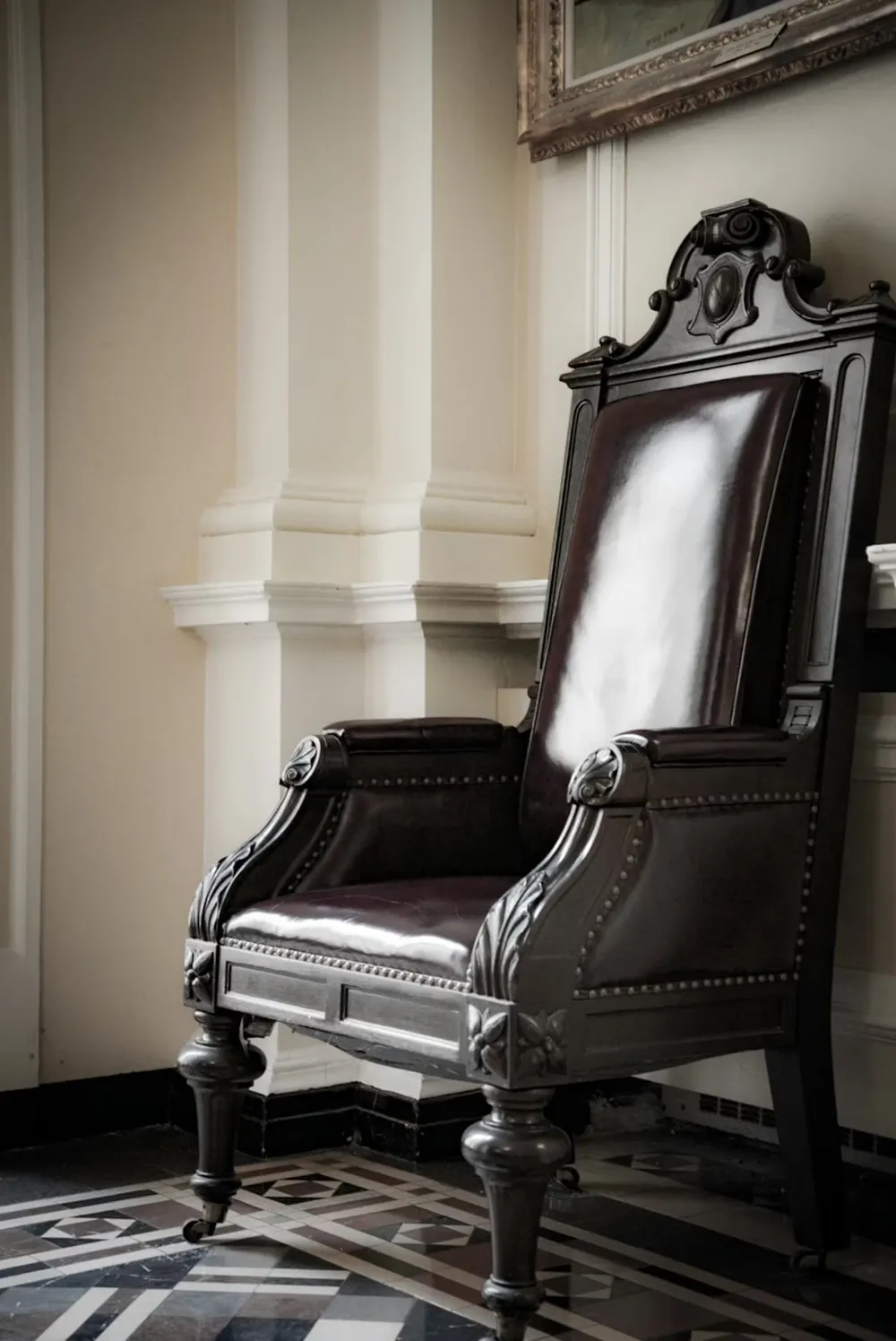
Every government has an institution around which everything else ultimately revolves. In Cameroon, that institution is the Presidency.
The Constitution vests executive authority in the President of the Republic, entrusting the office with safeguarding the Constitution, ensuring the continuity of the State and guaranteeing the proper functioning of public authorities. The 2026 constitutional amendment, which introduced the office of Vice-President, further clarifies how executive authority may continue through delegation or succession under specific constitutional circumstances. It distinguishes between temporary inability, delegated authority, and a vacancy of office. Like most constitutions, it answers many questions. It doesn’t answer all of them. It says little about the prolonged physical absence of a president who remains constitutionally in office. It is within that constitutional silence that lawyers, politicians and citizens have begun asking different questions, and arriving at different answers.
For the executive, however, the Constitution leaves little room for doubt. Communication Minister and Government Spokesperson René Emmanuel Sadi has insisted that there is “no vacancy of power.” In the administration’s reading of the text, the conditions that trigger presidential succession are clearly defined: death, formal resignation or permanent incapacity determined through the constitutional process. None of those conditions, it argues, has occurred. Physical absence, by itself, does not end the President’s constitutional powers. That interpretation reflects an important constitutional principle: continuity of the State should not depend on speculation or rumour but on objectively verifiable constitutional events. From that perspective, the government’s insistence that there is no vacancy of power is rooted in constitutional certainty rather than political convenience alone.
The same constitutional text, however, has produced remarkably different readings. Lawyer Christian Ntimbane Bomo argues that prolonged and unjustified absence from the President’s official seat in Yaoundé could, under broader principles of administrative law, amount to an implicit resignation. His reasoning does not rely on an explicit constitutional provision but on the argument that abandonment of an official post may, in law, be inferred from conduct. His interpretation has remained exactly that, an interpretation. The Constitutional Council, the only institution empowered to declare a constitutional vacancy, has made no such finding.
Opposition leaders have approached the matter from yet another direction. Some have petitioned the Constitutional Council to examine whether constitutional conditions for vacancy exist. Others, including Social Democratic Front leader Joshua Osih, have focused less on succession than on transparency, arguing that citizens deserve greater clarity about how executive authority continues to be exercised during such an extended absence.
The Constitution has not changed. What has changed is the way different actors now read the same constitutional text.
Then the documents begin to speak.
While lawyers debated what the Constitution meant and politicians traded competing narratives, the State continued its quiet work. Presidential decrees authorised military promotions. New appointments were made to public institutions. Financing agreements with international partners, including the International Development Association of the World Bank and the Islamic Development Bank, received presidential approval. The Official Gazette shows that the government continued to issue formal executive acts even as public unease grew.
That is where the story becomes more complicated. The continued issuance of decrees demonstrates that administration continued to function. The existence of executive acts answers one constitutional question, whether government continued to function, but not another: whether citizens were given sufficient information to understand how executive authority was being exercised. It does not, by itself, settle the broader questions raised about constitutional interpretation, openness about how decisions were being made or public confidence. A government may continue to function according to law while citizens continue to ask how authority is being exercised and communicated. Continuity, it turns out, is not always the same as confidence. The first is a legal question. The second is about whether citizens believe the system is working as it should.
The question is not unique to Cameroon. In 2010, Nigeria faced its own constitutional dilemma after President Umaru Musa Yar’Adua remained abroad for medical treatment without formally transferring authority as required under the Nigerian Constitution. Faced with an institutional impasse, Nigeria’s National Assembly invoked what became known as the Doctrine of Necessity, recognising Vice-President Goodluck Jonathan as Acting President until constitutional order could be restored. As legal scholar Esther Chidera Agbom observes, the doctrine was presented not as a substitute for the Constitution but as an exceptional measure intended to preserve it.
Cameroon’s system is different, and comparisons should be drawn with care. Yet Nigeria’s experience illustrates a broader lesson. No constitution can anticipate every circumstance. The real question is how institutions respond when reality stretches beyond the written text. When that happens, institutions are called upon not merely to exercise power but to preserve confidence in the system itself.
That is the real significance of this debate. Moments like these remind us that constitutions are not written for ordinary days. They are written for difficult ones. For weeks, public attention has centred on President Biya’s whereabouts, his health and the question of when he will return. Yet those questions, significant though they are, may not be the most enduring ones. The deeper issue concerns the strength of public institutions. How should executive authority be exercised when circumstances fall outside the ordinary rhythm of public life? How much transparency is necessary to sustain public confidence? And how should constitutions balance legal certainty with the flexibility required to confront the unexpected?
Power is easiest to trust when it is visible. It is doubt that sends citizens back to the Constitution. Constitutions are not written because leaders are always present. They are written because institutions must endure even when individuals are absent. Their purpose is not simply to distribute power but to ensure that, when difficult moments inevitably arrive, the State continues to function and citizens can understand why. In the end, the true measure of institutional strength is not merely whether government continues to operate. It is whether legality, transparency and public confidence continue to walk together. Once they begin to drift apart, constitutional debate quickly becomes public debate. In the end, the true measure of institutional strength is not merely whether government continues to operate. It is whether legality, transparency and public confidence continue to walk together.